Why Most Hiring Teams Stall Before First Interview
An AI recruiting workflow should remove low-value manual work, but most teams still lose days between approved requisition and first quality interview. The bottleneck is usually not sourcing alone. It is the handoff chain: intake notes are incomplete, screening logic changes midstream, and interview scheduling starts before evaluation criteria are aligned.
Talenteria’s product structure supports a tighter sequence: define job and pipeline structure in applicant tracking, run candidate screening and matching against set criteria, and move shortlisted applicants into AI video or voice interviews with structured evaluation. When these steps are connected, recruiters reduce cycle time and hiring managers receive more consistent slates.
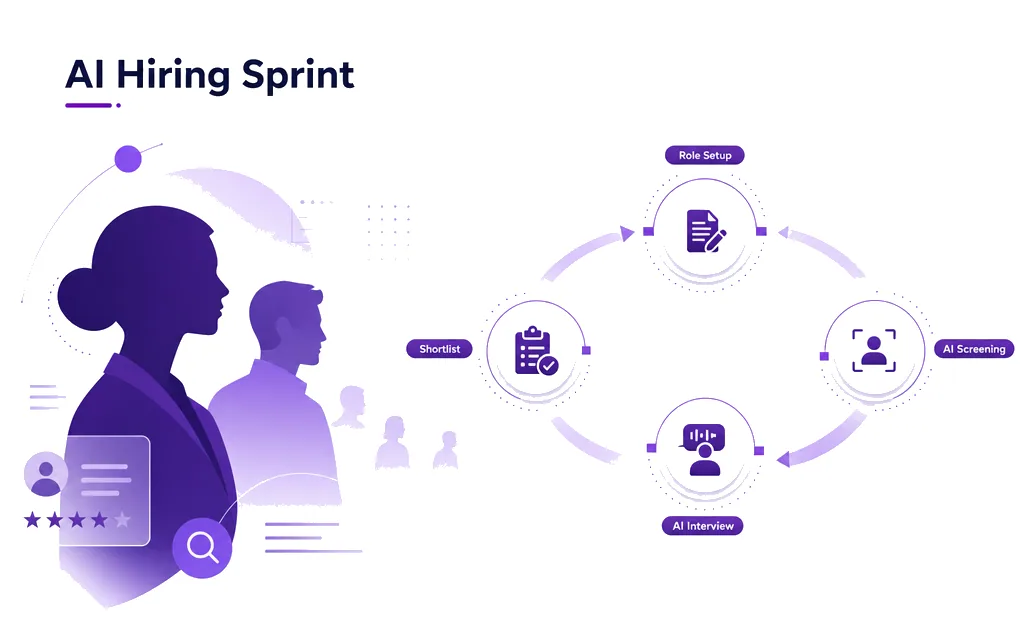
The 4-Stage AI Recruiting Workflow
1. Role Setup and Intake Alignment
Start by aligning hard requirements before applications scale. A practical intake packet should include non-negotiables, deal-breakers, and interview competencies. In Talenteria, teams can manage job openings and candidate flow in one system, then use consistent workflow stages for recruiter and manager collaboration.
2. AI Screening and Matching
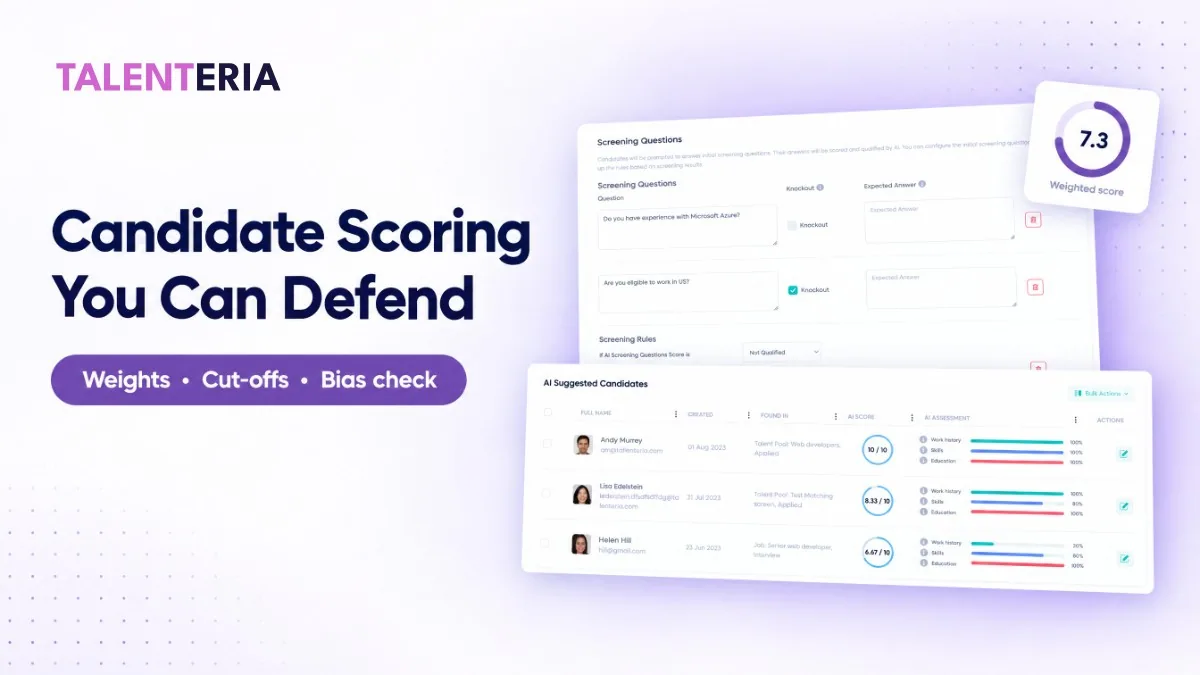
With intake standards fixed, apply candidate screening and matching logic. Talenteria supports AI ranking/scoring and matching so recruiters can prioritize candidates by fit, not by CV order. The goal here is not to automate final hiring decisions; it is to produce a defensible shortlist faster, with transparent screening criteria.
3. Structured AI Interviews
Move shortlisted candidates to AI video or voice interviews for first-round consistency. Talenteria’s interview flow is designed for asynchronous execution, so candidates can respond without calendar bottlenecks. This helps recruiting teams evaluate communication quality at scale before manager panels begin.
4. Interview-Ready Handoff
The final stage is manager-ready packaging: candidate fit score, interview evidence, and a short decision note. This handoff model prevents rework and keeps time to shortlist predictable. Recruiters can then schedule or manage next-step interviews from the same operational flow.
Practical Example: 10 Open Roles, One Weekly Intake Rhythm
A TA team managing 10 active roles can run this weekly cadence:
- Monday: finalize role criteria and stage definitions with hiring managers.
- Tuesday-Wednesday: run AI screening and matching, then quality-check top-ranked candidates.
- Thursday: launch AI interviews for top candidates and monitor completion progress.
- Friday: deliver interview-ready shortlist with clear recommendation tiers.
This turns hiring into a repeatable service model, not ad hoc firefighting.
Checklist: What to Standardize Before You Scale
- Define must-have vs nice-to-have criteria before screening starts.
- Use one scoring logic per role family to reduce reviewer drift.
- Set a shortlist SLA, for example, 5 business days from requisition open.
- Require a concise handoff note with evidence for every recommended candidate.
- Track where delays happen: intake, screening review, interview completion, or manager feedback.
How to do this in Talenteria
- Create or confirm the job opening workflow and candidate stages in Talenteria’s applicant tracking flow.
- Set screening criteria and use AI Screening and Matching to rank and categorize candidates by job fit.
- Shortlist qualified profiles and launch AI Video/Voice Interviews for consistent first-round evaluation.
- Use the Interviews area to monitor upcoming, incomplete, pending feedback, and completed interview statuses.
- Prepare manager handoff packets with score context and interview evidence, then proceed to live panel interviews.
Talenteria Feature Spotlight
- Applicant Tracking: central candidate and stage management with interview scheduling support.
- Candidate Screening and Matching: AI-driven scoring/ranking to prioritize likely-fit applicants.
- AI Video & Voice Interviews: structured asynchronous interviews for first-round consistency.
- Interview Status Management: operational views for upcoming, incomplete, pending feedback, and completed interviews.
Make Your AI Recruiting Workflow Operational
The teams that improve time to shortlist are not the ones using the most automation features; they are the ones running a disciplined AI recruiting workflow with clear stage ownership. Talenteria gives recruiters and hiring managers a connected structure for intake, screening, interviewing, and handoff so decisions happen faster and with better evidence.